At a Glance
Grease clogs are a common cause of repeat drain problems in restaurants, commercial kitchens, and food-service facilities. A cable machine can open a blocked line and restore flow, but grease may remain on the pipe walls. A professional water jetter uses high-pressure water to scour and flush grease, sludge, sand, and other soft buildup from the line, providing a more complete cleaning when grease is the primary problem.
Key Takeaways
• Grease can coat the inside of a pipe and reform after a cable machine opens only a path through the blockage.
• Water jetters clean the pipe walls with high-pressure water while flushing loosened material from the line.
• Electric jetters are well suited to many smaller drain lines and indoor applications.
• Gas-powered jetters provide greater pressure and water flow for larger commercial lines and heavier buildup.
• Cable machines, water jetters, and sewer inspection cameras can be used together when the job involves multiple conditions.
Why Grease Clogs Keep Coming Back
Grease does not always form one solid obstruction. In many drain lines, fats, oils, and grease collect along the inside walls of the pipe. A cable machine or drain snake may punch through the center of that buildup and restore flow, but a substantial amount of grease can remain behind.
That remaining material can collect more food waste and debris until the opening narrows again. This is why a line may appear clear after cable cleaning and then develop another grease stoppage relatively quickly.
How a Water Jetter Cleans Grease from Pipe Walls
A professional water jetter works differently from a cable machine. High-pressure water travels through a jetter hose to a specialized nozzle. Rear-facing jets help propel the hose through the line while the water scours grease and soft buildup from the pipe walls and flushes loosened material away.
For grease-heavy service work, the advantage is wall-to-wall cleaning. Instead of only opening a passage through the center of the blockage, the jetter addresses the material coating the pipe interior.
What Water Jetters Are Designed to Remove
Water jetters are particularly useful when the line contains soft or flushable buildup. The client draft identifies four common applications:
• Grease buildup
• Sludge
• Sand
• Ice blockages
The right equipment still depends on pipe size, access, line condition, and the material causing the stoppage. When roots, solid obstructions, or other hard blockages are present, a cable machine and appropriate cutter may be needed before jetting.
Electric vs. Gas Water Jetters for Grease Cleaning
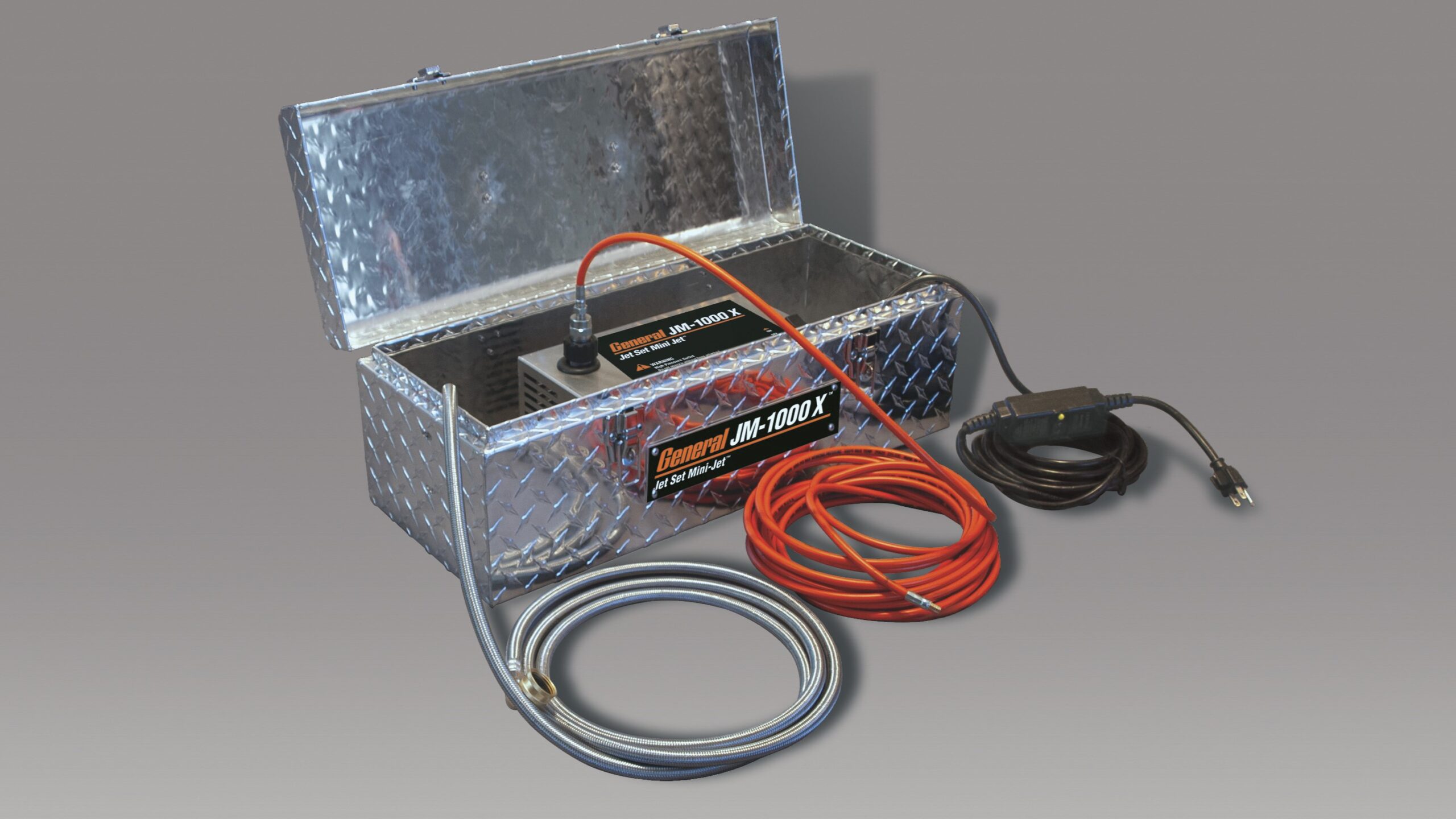
The right jetter depends on the size of the line and the demands of the job. Electric water jetters are compact and well suited for many indoor applications and smaller drain lines. The client draft notes that electric units typically operate up to about 1,500 PSI.
Gas-powered water jetters provide higher pressure and greater water flow for larger commercial drain lines. The draft cites approximately 3,000 PSI for many gas-powered applications. Because job requirements vary, professionals should match pressure, flow, hose, nozzle, and line capacity to the specific application.
Why a Pressure Washer Is Not a Substitute for a Drain Jetter
A pressure washer is designed for surface cleaning, not for moving a hose through drain and sewer lines. Professional drain cleaning jetters are built around the hose, nozzle, pressure, flow, and control requirements of pipe cleaning.
General Pipe Cleaners water jetters also use hose-pulsation features such as Vibra-Pulse® on applicable models. Pulsation helps reduce friction so the hose can negotiate bends and travel farther through the line. That is a drain-cleaning function a standard pressure washer is not designed to provide.
A Practical Grease-Clog Cleaning Workflow
Grease service calls do not always involve grease alone. A professional workflow may combine multiple tools when the line includes roots, solid obstructions, recurring buildup, or an unknown pipe condition.
| Job condition | Starting equipment | Follow-up | Verification |
| Grease or soft buildup | Water jetter | Continue jetting until loosened material is flushed from the line | Sewer inspection camera when verification is needed |
| Roots or solid obstruction with grease buildup | Cable machine with appropriate cutter | Water jetter to remove remaining grease and flush debris | Sewer inspection camera |
| Recurring or unclear stoppage | Sewer inspection camera | Select cleaning equipment based on inspection findings | Follow-up camera inspection |
The sequence should be adjusted to the actual line condition. Inspection findings, pipe material, access, safety requirements, and manufacturer guidance should determine the final equipment choice.
When Cable Machines, Jetters, and Cameras Work Together
A professional drain cleaning machine remains an important tool when the job includes roots or dense obstructions that need mechanical cutting. Once the hard obstruction is opened or removed, a water jetter can be used to scour grease and soft buildup from the pipe walls and flush the line.
A sewer inspection camera can then help verify the cleaning result and identify structural conditions or remaining obstructions that may contribute to repeat problems. This inspect, clean, and verify approach gives plumbers and drain cleaning professionals more information than relying on flow alone.
Choosing the Right Water Jetter for Grease-Clog Work
For restaurants, commercial kitchens, food processing facilities, and other properties where grease buildup is a recurring maintenance issue, equipment selection should start with the drain lines being serviced most often. Line diameter, run length, access, available water supply, required pressure and flow, and indoor or outdoor operation all affect which jetter is appropriate.
General Pipe Cleaners offers electric and gas-powered water jetters for professional drain and sewer cleaning applications. For broader equipment matching, use the Pro Tool Selection Guide or contact the Drain Brains® at 800-245-6200.
Frequently Asked Questions
Why do grease clogs keep coming back?
Grease can remain attached to the inside walls of a pipe even after a cable machine opens a path through the blockage. As more grease and debris collect, the opening can narrow again and create another stoppage.
What is the best type of drain cleaning equipment for grease buildup?
A professional water jetter is well suited to grease buildup because high-pressure water can scour the pipe walls and flush loosened material from the line. Equipment should still be matched to the line size, access, and overall pipe condition.
How is a water jetter different from a cable machine?
A cable machine mechanically cuts or penetrates an obstruction. A water jetter uses high-pressure water to remove and flush soft buildup from the pipe walls, which makes it especially useful for grease, sludge, sand, and similar material.
When should a cable machine be used before a water jetter?
A cable machine may be the better starting tool when roots, solid debris, or another hard obstruction must be cut or opened first. The line can then be jetted to remove remaining grease and flush loosened debris.
Can a water jetter help reduce recurring grease clogs?
Yes. By removing grease from more of the pipe surface instead of only opening a center passage, jetting can provide a more complete cleaning. No cleaning method can guarantee that grease will never accumulate again.
Are electric water jetters suitable for indoor grease-cleaning jobs?
Electric water jetters are commonly used for smaller drain lines and indoor applications. The correct model should be selected based on line size, cleaning distance, pressure, flow, and access.
When is a gas-powered water jetter a better fit?
Gas-powered jetters provide greater pressure and water flow for larger lines and heavier commercial cleaning applications. They must be operated according to manufacturer guidance and applicable ventilation and safety requirements.
Can a pressure washer be converted into a sewer jetter?
A standard pressure washer is not designed as a professional drain cleaning machine. Purpose-built water jetters use drain-cleaning hoses, nozzles, pressure and flow characteristics, and features designed to help the hose travel through pipe.
Why use a sewer inspection camera after jetting?
A camera inspection can help verify that grease and debris have been removed and identify cracks, roots, foreign objects, or other conditions that may contribute to repeat stoppages.
How should a professional choose the right jetter for grease-clog work?
Start with the line diameter, run length, access point, available water supply, indoor or outdoor operating conditions, and the amount of buildup. Match those requirements to the jetter’s pressure, flow, hose, nozzle, and line-capacity specifications.
Need Help Choosing the Right Water Jetter?
Grease-heavy service work often requires more than simply reopening the line. Selecting the right jetter for the pipe size, run length, and buildup helps professionals clean more thoroughly and plan a repeatable maintenance approach.
Explore General Pipe Cleaners’ Water Jetters or use the Pro Tool Selection Guide. For additional help, contact the Drain Brains® at 800-245-6200 or [email protected].