

At a Glance
A sewer line camera helps plumbers and drain cleaning professionals see inside a pipeline to confirm what’s happening and where. By identifying cracks, corrosion, root intrusion, and developing blockages early, inspections support more targeted repairs and reduce guesswork.
Key Takeaways
- Find hidden issues before they become emergencies
- Confirm the cause of a blockage, not just the symptom
- Pinpoint location to support targeted repairs and planning
- Improve job records with recorded footage and inspection notes
Why Sewer Inspection Cameras Matter
For plumbers and drain cleaning professionals, sewer inspection cameras are essential tools for uncovering problems that would otherwise go unnoticed. Many issues in pipeline, such as cracks, corrosion, root intrusion, and small blockages, start out hidden beneath the surface, invisible from the access point. A sewer line camera allows professionals to see directly inside the pipe, identifying the location and nature of these problems so repairs can be targeted. By revealing what’s hidden, inspections help prevent minor issues from turning into costly emergencies.
What a Sewer Line Camera Helps You Identify
Sewer inspection cameras are especially valuable because they don’t just detect blockages, they reveal the underlying causes. A clogged line might be caused by tree roots pushing through cracks, or corrosion weakening a section of pipe. By providing a real-time view inside the pipe, cameras help professionals diagnose the issue, plan an effective solution, and avoid unnecessary digging or guesswork.
In many cases, the difference between a quick fix and a repeat call comes down to knowing what’s happening beyond the blockage. A camera inspection helps confirm whether the line problem is isolated or whether there’s a condition that will keep coming back until it’s addressed.
Learn more about Sewer Cameras and Pipe Locators.
Common Inspection Challenges (and How Crews Avoid Them)
Even experienced plumbers face challenges during inspections. Kinking the push rod can occur in tight bends if not guided carefully, and small pipes filled with debris can restrict camera movement. The camera head itself is vulnerable to damage from obstructions, making careful monitoring essential.
A reliable inspection workflow helps reduce these issues: confirm the best access point, guide the push rod through bends without forcing it, and monitor the screen closely as it advances through restricted areas. When the camera reaches the problem area, documenting what’s visible and the distance traveled helps keep the findings clear and usable.
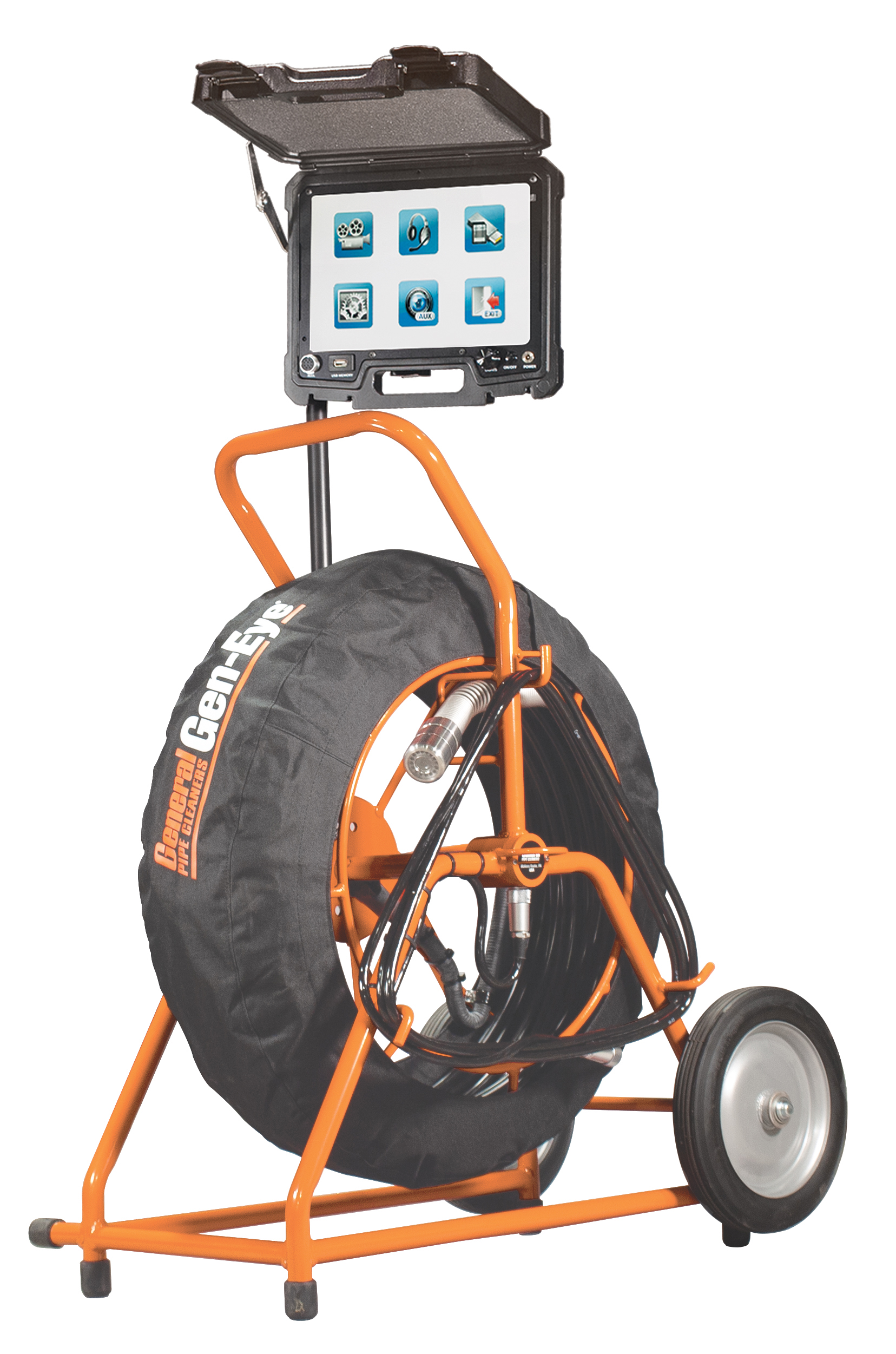
High-quality inspection systems, like General Pipe Cleaners’ Gen-Eye Fusion™ High-Def Inspection Camera, are designed to support these real-world conditions with flexible push rods, durable camera heads, and clear video that captures detail. These sewer line camera systems also allow recording and Wi-Fi streaming, which can simplify job records and communicating findings on site.
Why Documentation Matters
A camera inspection is most valuable when the crew can document what they found clearly. Capturing a short clip of overall pipe conditions, recording the problem area, and noting distance traveled helps keep findings consistent and easy to reference. When footage is saved and organized, it supports better handoffs, cleaner planning, and fewer follow-up questions after the inspection is complete.
Final Thoughts on Sewer Line Cameras and Inspection Equipment
By combining reliable inspection equipment with proper technique, drain cleaning professionals can uncover hidden issues early, prevent emergencies, and ensure repairs are planned efficiently. Sewer inspection cameras don’t just show what’s visible, they reveal the conditions inside the pipe that drive the right next step.
When inspections need precise position confirmation for planning, pairing a camera with the Gen-Eye® Hot-Spot Pipe Locator helps pinpoint where the camera head is in the line.
For more inspection and maintenance tips from General Pipe Cleaners, visit Ask The Drain Brains™.
For more information on General Pipe Cleaners’ sewer inspection solutions, contact the Drain Brains at 800-245-6200.
FAQ
Q1: What are sewer inspection cameras used for?
A: Sewer inspection cameras are used to identify hidden issues inside pipes, including blockages, cracks, corrosion, root intrusion, and structural damage—without the need for excavation.
Q2: Why are sewer cameras better than traditional diagnostic methods?
A: Cameras provide a real-time visual of the pipe interior, allowing professionals to pinpoint the exact location and cause of a problem. This reduces guesswork, unnecessary digging, and repair time.
Q3: What hidden issues can a sewer line camera reveal besides a blockage?
A: In addition to blockages, a sewer line camera can reveal cracks, corrosion, root intrusion, offset joints, scale buildup, and other conditions that can lead to repeat problems if left unaddressed.
Q4: Can sewer inspection cameras record and document findings?
A: Many systems allow inspections to be recorded using internal memory, external storage, or wireless streaming to mobile devices, making it easier to share findings or keep job records.
Q5: What inspection details should plumbers capture for better documentation?
A: Capture the problem area, the distance traveled when the issue appears, and a short clip showing overall pipe conditions. Adding job details to the recording helps keep files organized and usable.
Q6: What causes a push rod to kink during an inspection, and how can it be prevented?
A: Kinking can occur when a rod is forced through tight bends or advanced without proper guidance. Crews reduce risk by advancing gradually, using controlled pressure, and avoiding forcing the rod past resistance.
Q7: How do you avoid damaging a camera head during inspections?
A: Slow advancement through restricted areas, careful monitoring, and avoiding forcing the head into obstructions are key. If debris is restricting movement, clearing steps may be needed before continuing inspection.
Q8: How long can sewer inspection cameras operate in the field?
A: Run time varies by system, but battery-powered cameras are designed to last through extended inspections and full workdays, depending on usage and battery capacity.
Q9: Are sewer inspection cameras compatible with different pipe sizes and systems?
A: Yes. Most inspection camera systems are designed to work across a range of pipe diameters, using different camera heads, push rods, and reel options depending on the application.
Need Help Selecting the Right Sewer Line Camera?
For more information about the proper camera for your needs, call Drain Brains at 800-245-6200 or visit Drain Brains
Check this space next month for tool maintenance tips focusing on Flexible Shaft Devices, by visiting Ask The Drain Brains.