
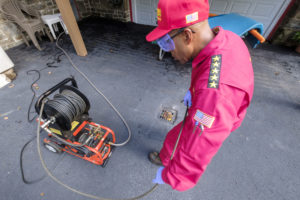
Water jetters are an essential tool for drain cleaning professionals. Whether you are working with an electric water jetter in a residential kitchen or using a trailer-mounted jetter, jetting is a go-to solution for tackling grease, sludge, and soft blockages.
This guide covers the fundamentals of water jetting equipment for contractors, from sewer jetter hose movement to cold-weather protection, so you get faster results and protect your gear.
Before you fire up your jetter and dive into your next job, here are proven best practices that improve results, extend the life of your equipment, and help you avoid costly mistakes.
Identify the Right Tool for Each Job with Water Jetting Equipment
Jetters are highly effective for clearing grease, sand, sludge, and even ice. When you suspect a root intrusion, start with a traditional cable machine and follow up with a jetter and an inspection camera.
When you are not sure what is causing the clog, use your experience. Lines from restaurants, multi-family housing, or industrial kitchens are likely packed with grease. Lines from factories or industrial settings may be full of sludge, oil, or sand. Make an educated guess and pick your tool accordingly.
When to jet and when to cable
Use a water jet drain cleaner machine for grease, sludge, fine sand, and ice. Start with a cable machine for roots or solid objects you must cut or retrieve. Finish with the jetter to clean the pipe wall and carry debris downstream. Confirm with a quick camera pass.
How to Move a Sewer Jetter Hose for the Best Cleaning Results
For efficient cleaning with water jetting equipment, the hose should stay in motion. The strongest cleaning action happens on the pull-back. A simple technique is to push about two feet in and pull one foot back in a steady rhythm.
Do not let the hose remain in one spot. Pausing can create a vortex behind the nozzle that draws in debris and may trap your hose. A smooth in-and-out cadence keeps water cutting, lifts material off the wall, and prevents hang-ups.
Choosing the Correct Sewer Jetter Hose Size for Water Jetting Efficiency
Are you using the correct size hose for the pipe you are trying to clear? Another way to get your hose stuck in the pipe is by using the wrong size. When working with high-pressure water, use the largest hose that will reasonably fit the drain. A larger inside diameter reduces friction loss through the hose. With less loss, you preserve pressure and flow at the nozzle, which makes the job easier and faster.
Reference table: matching hose approach to line size
| Line size (ID) | Recommended jetter hose approach | Typical nozzle choice | Common materials |
| 1.5 to 2 in | Use the largest hose that fits. Keep runs short and tidy. | Small penetrator to open, then flusher | Grease and soft debris |
| 3 to 4 in | Standard jetter hose. Maintain steady pull-back motion. | Penetrator to open, then flusher or rotary | Grease, sand, sludge |
| 6 in and up | Step up hose ID to lower friction loss over distance. | High-flow flusher or rotary head | Sand, ice, heavy buildup |
How Jetter Hose Pulsation Protects Equipment and Improves Performance
Jetter hose pulsation and controlled vibration protect your hose and help you reach farther. Pulsation breaks the static grip between the hose and pipe wall so the hose slides around tight bends and through rough spots. It also reduces scraping and heat buildup that can shorten hose life.
When the industry first used high-pressure water cleaners, many crews tried pressure washer conversions with smooth hose and a backward-facing nozzle. Those setups often seized in the pipe because they lacked true pulsation. A stuck hose can turn into a very bad day. Dedicated water jetting equipment is engineered to pulse and advance safely.
How to Winterize Water Jetting Equipment and Prevent Pump Damage
Freezing is the number one way to kill a pump. If you live where temperatures drop, it is hard to keep a pump from freezing on a frigid day. The damage can happen before, during, and after the job, and it can affect your hose as well as your pump.
If your unit has an antifreeze tank, make a habit of using it whenever the temperature is close to freezing. Keep water moving through the system in cold weather. After the job, purge water from the hose and pump, and store reels and the unit in a heated space when possible. Replace any hose that shows bulges or soft spots.
Cold-weather quick list
- Circulate antifreeze before transport and after the job if equipped
- Avoid long idle periods in freezing temps
- Purge hose, gun, and pump at day’s end
- Store reels and the unit indoors when possible
Water Jetting Equipment FAQs
Q. How to move a sewer jetter hose correctly for maximum cleaning power
A. Keep the hose moving at all times. The strongest cleaning occurs during the pull-back, so feed about 2 feet in and pull 1 foot out in a steady rhythm. Do not pause in one spot because a vortex can form behind the nozzle and trap the hose.
Q. How to choose the right sewer jetter hose size for effective water jetting
A. Use the largest hose that reasonably fits the drain. A larger inside diameter reduces friction loss, preserves pressure and flow at the nozzle, and speeds the job. Match hose, nozzle, and line size, and keep reels and fittings as short and straight as practical.
Q. Why jetter hose pulsation and vibration are essential for safe jetting
A. Pulsation breaks the static grip between the hose and the pipe wall, so the hose slides around bends and rough spots. It reduces scraping and heat that can damage hoses and helps prevent the stuck-hose scenario common with early pressure washer conversions.
Q. When to use a water jet drain cleaner machine instead of a cable machine
A. Use a jetter for grease, sludge, fine sand, and ice. Start with a cable machine when you suspect roots or a solid object that must be cut or retrieved. Finish with a jetter and a quick camera pass to clean the pipe wall and confirm flow.
Q. How to winterize water jetting equipment and prevent pump or hose damage
A. Before cold jobs, circulate antifreeze if the unit is equipped. During the job, keep water moving whenever temperatures are near freezing. After the job, purge water from the hose and pump, refill the antifreeze circuit if needed, and store the unit and reels in a heated space.
Talk to the Drain Brains
Need expert advice on water jetting equipment, hose selection, or nozzles for your most common line sizes? Contact the Drain Brains at General Pipe Cleaners at 800-245-6200 or connect with our team here for recommendations.
View all our available water jetters here.
Lastly, you can find a retailer or distributor near you via our Where to Buy page.