Question: We use cable drain cleaners at our facility, but my younger techs keep telling me to switch to high-pressure water jets. Are they right?
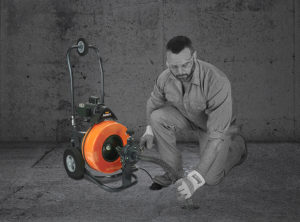
Answer: Both belong on the truck. Cable machines are best for cutting roots and retrieving solid objects. Water jetters are best for grease, fine sand, and ice. A jetter’s high-pressure stream shears buildup from the pipe wall and flushes debris away for wall-to-wall cleaning.
Choosing the right equipment for the job
Electric sewer jetters such as General’s JM-1450 deliver about 1,500 psi at roughly 1.7 gpm, ideal for indoor work where compact size, quiet operation, and no exhaust matter. For longer runs and outdoor sewers, gas units like the JM-2900 deliver 3,000 psi at 4 gpm to handle grease-packed lines and extended distances. Many contractors pair a gas jetter with a portable reel to bring full jetting power indoors while the engine stays safely outside.
Why pulsation matters
Avoid converting a pressure washer. Professional water jetters use pulsation to break hose-to-pipe friction so the hose slips around bends and reaches farther. General’s Vibra-pulse provides this controlled pulse for reliable advancement and consistent cleaning.
When to use each tool
- Jet for grease, scale, fine sand, ice, or long runs where complete wall-to-wall cleaning is required.
- Cable for roots, heavy blockages, or foreign objects that must be cut or retrieved.
- Use both when needed: open or retrieve with a Flexicore cable machine, then jet to clean the pipe wall and carry fines downstream.
That sequence helps ensure clogs are gone and stay gone.
Sewer Cleaning Equipment: Common Questions Answered
1. What types of sewer cleaning equipment do professionals use most often?
Most pros rely on two main types: cable machines and water jetters. Cable machines are best for roots, heavy blockages, and retrieving objects, while jetters excel at clearing grease, sand, ice, and scale with wall-to-wall cleaning.
2. How does a water jet drain cleaner machine compare to traditional cable equipment?
A water jetter uses high-pressure water to cut through grease and flush lines clean, while cable equipment uses cutters to break up roots or obstructions. Many contractors use both together, cabling first to open the line, then jetting to ensure a thorough clean.
3. Why shouldn’t I convert a pressure washer into sewer cleaning equipment?
Unlike professional water jetters, pressure washers lack features like Vibra-pulse®, which helps hoses glide around bends and deep into lines. Without pulse action, hoses can become jammed in the pipe, reducing their effectiveness and increasing the risk of damage.
4. When should I use sewer cleaning equipment like a jetter instead of a cable?
Use a jetter for grease, scale, ice, or long runs where full pipe flushing is needed. Choose a cable machine when dealing with tree roots, foreign objects, or heavy blockages. For the most challenging jobs, many pros use both in sequence.
5. When is it best to pair cable machines with water jetting equipment?
Many professionals cable first to break through tough blockages, then follow up with a jetter to flush grease, scale, or residual debris. This combined method ensures a thorough clean and minimizes the need for repeat service calls.
For more information or to ask a question, please call Drain Brains at
You can always email us at [email protected] or contact us here via online form.
View all our available water jetters here.
Lastly, you can find a retailer or distributor near you via our Where to Buy page.