

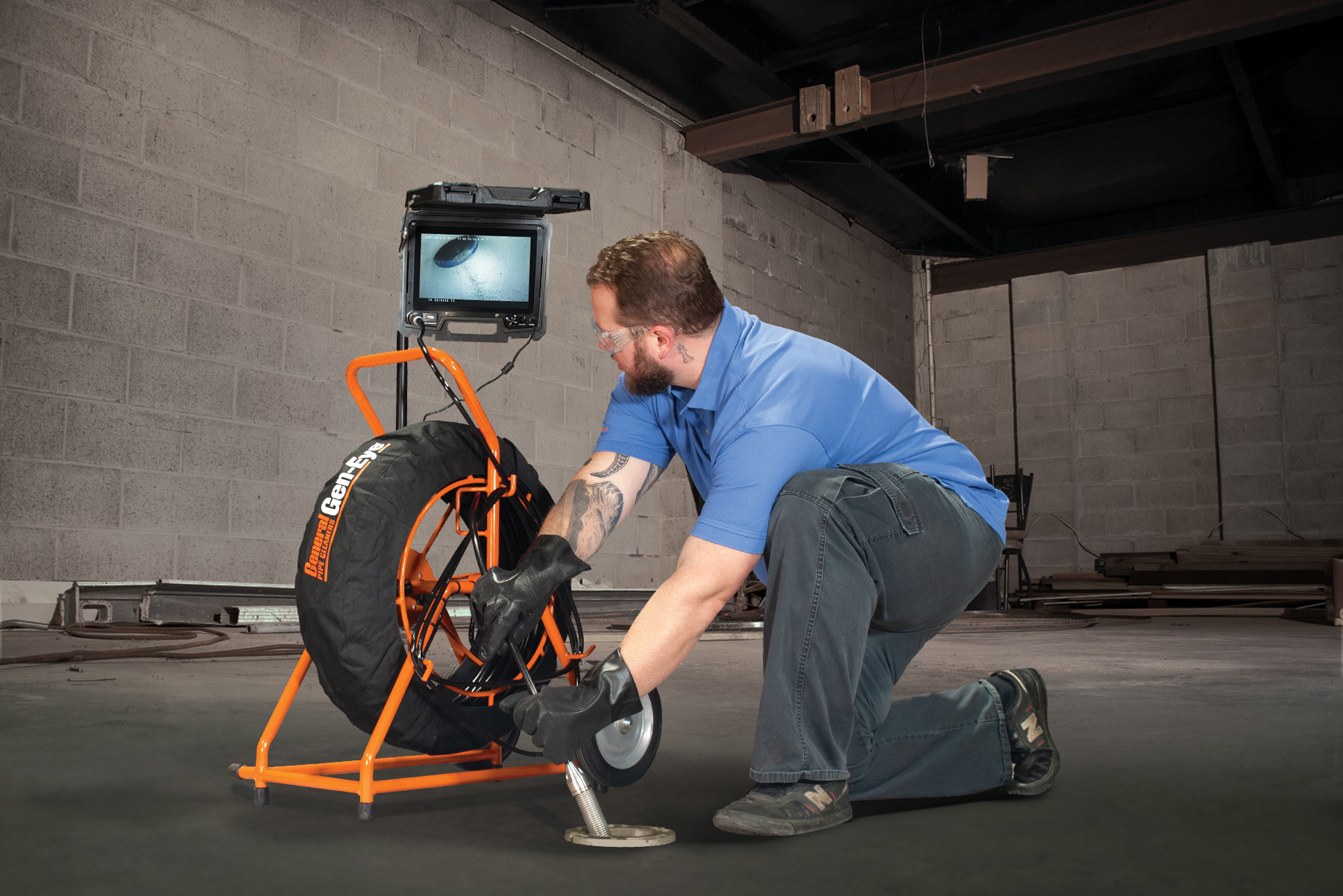
Investing in sewer inspection and location systems is a major decision for most small businesses. But the right equipment can provide essential diagnostics and open new opportunities; ultimately saving or generating significant income. That’s why it’s so important to approach this purchase with careful consideration. The wrong system can be a costly mistake.
Before you commit, here are four key questions to help guide your decision:
1. What size pipes, drains, or sewers are you inspecting?
One of the first decisions is choosing between a push rod system and a tractor pull system.
Tractor pull systems are typically used for large, municipal-style drain pipes, 10 inches and above. These units pull themselves through the line and are usually controlled by an operator from a specially outfitted truck or van. They come equipped with lighting and swivel heads to navigate and inspect large-diameter pipe interiors.
Push rod systems, on the other hand, are manually advanced by the contractor and are best suited for interior or lateral lines. These units typically have a maximum range of 200 feet and can handle pipe sizes from roughly 1½ inches to 12 inches, depending on the system. Push systems are far more common, widely used by plumbers, drain cleaners, HVAC techs, and electricians, so we’ll focus on those going forward.
Push-style systems come in three main categories:
- Micro-systems are designed for 1½- to 3-inch pipes. Their rods are very flexible but weaker, and generally lack recording or locating features.
- Mini-systems serve 2- to 4-inch lines and are ideal for indoor plumbing. Most include a locator beacon and optional recording.
- Main-line systems work in 3- to 12-inch pipes and emphasize strength over flexibility for outdoor work.
As a general rule, use the largest, strongest push rod that will still fit in the pipe. This helps reduce wear and allows you to push further with less risk of damage.
2. Do you need a built-in recording device?
If you need to provide proof of performance or want to use inspection footage as a sales tool, a built-in recording device can be a smart investment.
If your work only requires occasional documentation, external recorders are widely available. But if integrated recording is a priority, you’ll typically be choosing between DVD, SD card, or USB memory formats. (Rule of thumb: the fewer moving parts there are, the less likely they are to experience repair issues.)
Many systems also offer Wi-Fi connectivity, allowing you to view and save inspection videos directly to your smartphone or tablet for easier sharing with customers. A great example is the Gen-Eye POD®, which features a Wi-Fi hotspot, USB recording, and compatibility with mobile devices.
3. Do you need to locate the pipe inspection camera head?
Most mini and standard-sized units have a built-in locator beacon/transmitter so that you can pinpoint the location and depth of the camera head while it is in the pipe. For example, the Gen-Eye X-POD® Plus includes a powerful built-in transmitter and locator-compatible system to simplify troubleshooting and repair planning. Do not underestimate the importance of location in the inspection process. If in question, err on the side of safety and get a locator!
While most locators are fairly accurate at this point, some are easier to use than others.
4. How available is service after the sale?
Pipe inspection cameras and location systems are video cameras that you put down a sewer. What could go wrong with that? Well, as it turns out, plenty! The bad news is that repairs to your camera system can be costly and lengthy.
The good news is that proper training can significantly reduce your repair bills! We have found a very positive correlation between user technique and the frequency of damage to camera units. This correlation cuts across all sizes and makes of inspection systems. For this reason, it’s wise to purchase your pipe inspection unit from a factory representative who can train you and your employees in the proper use of this high-tech product. Initial training can make the difference between profit and loss when it comes to camera systems.
Also, consider where and how your unit will be serviced. If you need to ship your system overseas for repairs, downtime can add up fast. Look for a supplier with a factory-authorized service center in your region. General Pipe Cleaners offers support, helping you avoid costly delays and minimizing downtime.
These four questions will help to frame the search for your new pipe inspection system. Your familiarity and comfort with certain brands, distributors, and representatives will also play a key role in your decision. Talk to coworkers and others in the field to gain other points of view and insight into how these units perform in real-life situations.
The purchase of a drain camera system is a significant investment that will impact the way your company does business for years to come. Take your time and make the right call!
Contact the Drain Brains® at General at 800-245-6200 or [email protected].
Frequently Asked Questions
What’s the best type of pipe inspection camera for residential jobs?
For most residential work, a mini push rod system is ideal. It fits 2- to 4-inch lines, has enough flexibility for indoor use, and often includes essential features like recording and locators.
Can I use the same inspection system for both indoor and outdoor pipes?
It depends on the size and layout of the lines you’re inspecting. Mini-systems are better suited for indoor plumbing, while main-line push systems are more rugged for outdoor use and can handle larger, tougher pipes.
Do I need a locator with my pipe camera?
Yes— especially if you’re troubleshooting blockages or planning repairs. A built-in locator helps you find the exact spot and depth of the issue, saving you time and avoiding unnecessary digging or guesswork.
What kind of recording features should I look for?
If you regularly show clients footage or need documentation, look for built-in recording with an SD card or USB storage. Wi-Fi compatibility is also helpful for quickly saving or sharing inspection videos from your phone or tablet.
How long do these camera systems usually last?
With proper use and routine maintenance, a good-quality system can last several years. However, durability depends heavily on training and how carefully the equipment is handled on the job.
What should I look for in a service or support plan?
Choose a supplier that offers local, factory-authorized service and ongoing training. Quick turnaround on repairs and access to parts can save you significant downtime and money in the long run.
Do all pipe inspection systems come with training?
Not always, but they should. The best suppliers offer hands-on training to help prevent user-related damage. Proper technique is key to protecting your investment and getting the most from your equipment.